
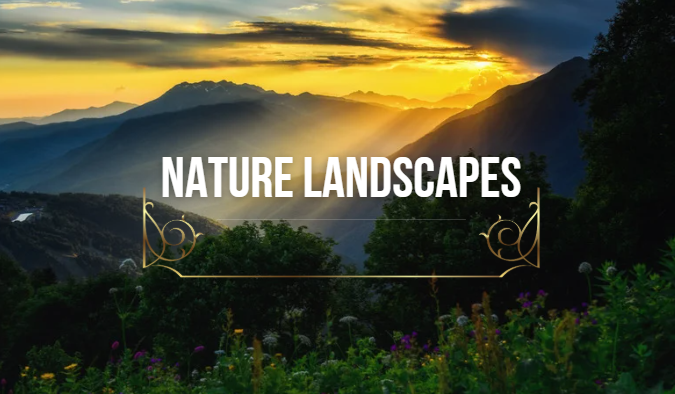
There’s a moment that happens when you stand in front of a vast mountain range, a silent desert, or a rolling green valley. A slow breath. A calm pause. A sense that the world is bigger than your worries. Nature landscapes have a way of doing that. They pull us out of our busy minds and gently remind us where we belong.
But why do these places affect us so deeply? And why, even in a digital first world, do we still crave them?
Why Nature Landscapes Feel So Emotional
Nature landscapes aren’t just “pretty views.” They connect to something older and deeper in us.
When we see open skies, flowing rivers, or endless forests, our brain relaxes. Studies show that natural scenery lowers stress, improves mood, and even boosts creativity—but you don’t need science to know this. You’ve felt it.
The emotional pull comes from:
- Stillness in a noisy world
- Scale that humbles us
- Simplicity that feels honest
Nature doesn’t rush. It doesn’t demand attention. It simply exists—and invites us to do the same.
The Curiosity Gap: Why We’re Drawn to the Horizon
Ever notice how your eyes always move toward the horizon in a landscape photo?
That’s curiosity at work.
Nature landscapes create gentle questions in our minds:
- What’s beyond that hill?
- Where does that river lead?
- What would it feel like to stand there?
Unlike fast content that overwhelms us, nature opens a quiet curiosity gap. It doesn’t give all the answers at once and that’s exactly why it feels so powerful.
This sense of “almost knowing” keeps us engaged, calm, and emotionally open.
Different Nature Landscapes, Different Feelings
Not all Nature landscapes speak to us in the same way. Each one triggers a unique emotional response.
Mountains Nature Landscapes
They represent strength, challenge, and perspective. Mountains often remind us that growth takes effort of Nature landscapes but the view is worth it.
Oceans
The ocean feels endless and freeing. It reflects both calm and chaos, helping us accept emotions instead of fighting them.
Forests
Forests bring comfort and grounding. The repetition of trees and natural sounds makes us feel safe and protected.
Deserts
Deserts teach us silence and resilience. There’s beauty in their simplicity—and a lesson in surviving with less.
Also Read: iWebTV
A Small Personal Insight of Nature Landscapes
The first time I truly noticed a nature landscape wasn’t during a big trip. It was an early morning walk when the sky was soft and quiet. No phone, no music—just light moving across the land.
That’s when I realized: nature doesn’t need us to travel far. It just needs us to slow down enough to see it.
Why We Trust Nature Landscapes More Than Noise
In a world full of filters, edits, and exaggeration, nature landscapes feel honest.
There’s no hidden agenda in a sunset.
No pressure in a field of grass.
No performance in a flowing stream.
That authenticity builds trust. We believe what we see because nature doesn’t pretend. It shows us beauty and imperfection—and that feels real.
Nature Landscapes in a Digital World
Ironically, the more digital our lives become, the more we seek nature.
Landscape photos, travel videos, and Nature landscapes wallpapers aren’t just trends they’re emotional reminders. They help us reconnect when we feel disconnected from ourselves.
Even viewing nature digitally can:
- Reduce mental fatigue
- Improve focus
- Create emotional balance
Still, nothing replaces being there in person even for a few minutes.
A Gentle Invitation for Deeper Explorers
If you enjoy thoughtful stories, slow reflections, and deeper insights into how nature shapes our emotions, our premium readers’ space explores these moments more intentionally without noise, without rush.
It’s there when you’re ready.
FAQs About Nature Landscapes
Q1: Why do natural landscapes make us feel calm?
Because they reduce mental overload and help our brain return to a natural, relaxed state.
Q2: Can looking at nature photos really help mental health?
Yes. Even visual exposure to natural scenes can lower stress and improve mood.
Q3: Which landscape is best for relaxation?
It depends on the person, but forests Nature landscapes and oceans are commonly associated with calm and emotional balance.
Q4: How can I connect with nature if I live in a city?
Start small parks, morning skies, plants, or even nature sounds can create connection.
Final Thoughts: Nature Landscapes Is Always Waiting
Nature landscapes don’t demand attention. They wait patiently for us to pause, to breathe, to notice.
You don’t need a passport.
You don’t need perfect weather.
You just need presence.
And when you offer that, nature gives something back quietly, honestly, and without conditions.